Checquy Court Membership Eligibility Restriction
The RookThe Checquy Court Membership Eligibility Restriction is the long-standing rule that non-powered members of the Checquy cannot join its ruling Court. It separates the organization’s operational workforce from its governing circle: non-powered staff may be valued as experts, but formal Court authority remains reserved for those with supernatural abilities. The restriction is part of a broader system that identifies, trains, records, and binds exceptional people in the name of national protection.
The Court and the wider organization
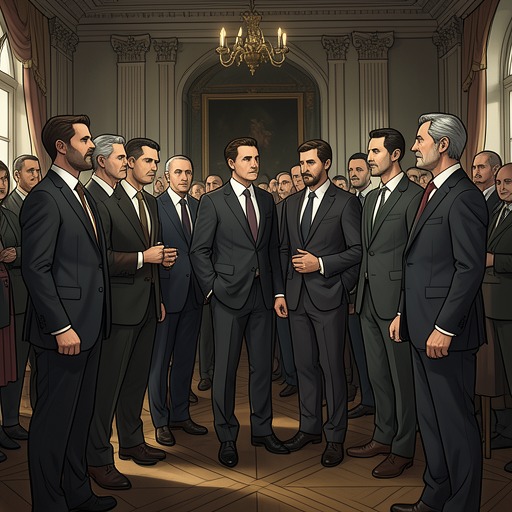
The Checquy comprises hundreds of people, including members with powers and non-powered specialists selected from the highest levels of their professions. Myfanwy Thomas explicitly rejects the idea that non-powered colleagues are lesser; she considers them just as capable as powered members. The eligibility rule nevertheless denies them Court membership, making a distinction between professional worth and access to institutional government. The Court is described as the Checquy’s ruling circle. It answers only to the highest individuals in the land, and not invariably even to them. The restriction therefore does more than set a qualification for promotion: it defines who may participate in the organization’s most powerful internal body and preserves a hierarchy in which supernatural ability is a condition of political standing.
Recruitment, training, and institutional records
The rule operates alongside the Checquy’s authority to claim citizens with powers. Children may be obtained from their parents through coercion or deception, sometimes with substantial payments; adults may be recruited with promises of power, wealth, and national service. Initiation combines ancient oaths with modern contracts and secrecy obligations. By full membership, the recruit is bound by many overlapping ties, so entry into the organization is difficult to separate from lasting institutional dependence. The Estate turns that recruitment into a sustained program of training and assessment. Its pupils study academic subjects and practical skills, while medical staff conduct extensive examinations: they record physical and mental characteristics, test abilities, and create detailed files. The examinations recur monthly, even though the staff have little success in explaining the origins of the pupils’ powers. These practices make recruits legible to the organization as both people and potential resources, while the Court rule reserves governing status for the powered population that the Checquy has gathered and trained.
Administration, secrecy, and oversight
The Checquy’s reach extends through government contacts and a large flow of reports. The Panic Lines connect it to officials across national and local branches of government, while discreet briefings encourage them to report unnatural events. Analysts sift the resulting information for patterns. At the same time, the organization conceals its existence from most outsiders, keeps its name off external paperwork, and maintains a computer network disconnected from outside systems. Its secrecy and administrative capacity help sustain the institution within which Court eligibility is enforced. The organization’s own procedures also show how difficult it can be to verify who exercises authority. After Grafter agents infiltrate the Checquy, a proposed implant-screening program requires intrusive examinations, multiple observers, and agreement among Checquy doctors and an independently selected civilian practitioner. The plan illustrates the burdens of oversight in a secretive organization: even a broad screening effort depends on elaborate checks because the people conducting it may themselves need scrutiny.
Authority and institutional significance
Court status carries concrete authorization powers. Myfanwy Thomas invokes a formal declaration to call upon Harper Callahan, a ward of the Estate, for an operation. The declaration assigns responsibility to her, and the accompanying rule limits authorization to Rooks, Bishops, and the Lord and Lady of the Checquy. This example shows how a restricted governing circle can wield powers unavailable to ordinary members, with the Court’s hierarchy shaping who may make consequential decisions. The restriction thus concentrates authority among the powered while relying on a much broader body of specialists, administrators, and trainees. The distinction is not presented as proof that non-powered members lack merit; Myfanwy’s account says the opposite. Its significance lies in the gap between acknowledged competence and formal eligibility, a gap maintained by the Checquy’s recruitment system, secrecy, and internal hierarchy.